
Advocating for TGI Communities
The Risks TGI People Face While Incarcerated
When we talk about the experiences of transgender, gender-expansive, and intersex (TGI) people within the Los Angeles County jail and prison system, we are talking about a population that faces an extremely high risk of violence, discrimination, and what can amount to cruel and unusual punishment. These harms can take many forms, including mental, physical, and sexual violence, as well as barriers to accessing gender-affirming healthcare.
For TGI people, vulnerability can begin as early as the initial intake process. Individuals may experience harassment or mistreatment while being processed into custody. Once inside, there are also significant concerns surrounding housing placements and whether people are housed according to their gender identity and individual safety needs.
For example, transgender women may be housed alongside cisgender men, placing them at increased risk of sexual and physical violence from other incarcerated people, as well as potential mistreatment by the very staff responsible for their safety. Transgender men can face different but equally serious challenges. Some may feel safer being housed with women because men's units can have higher levels of reported violence.
Unfortunately, this can create another problem. Rather than addressing these safety concerns, individuals may be placed in isolation or restrictive housing under the justification that it is for their own protection.

Maya Daniels and Bamby Salcedo embrace at a Re-Imagine LA Care First rally.
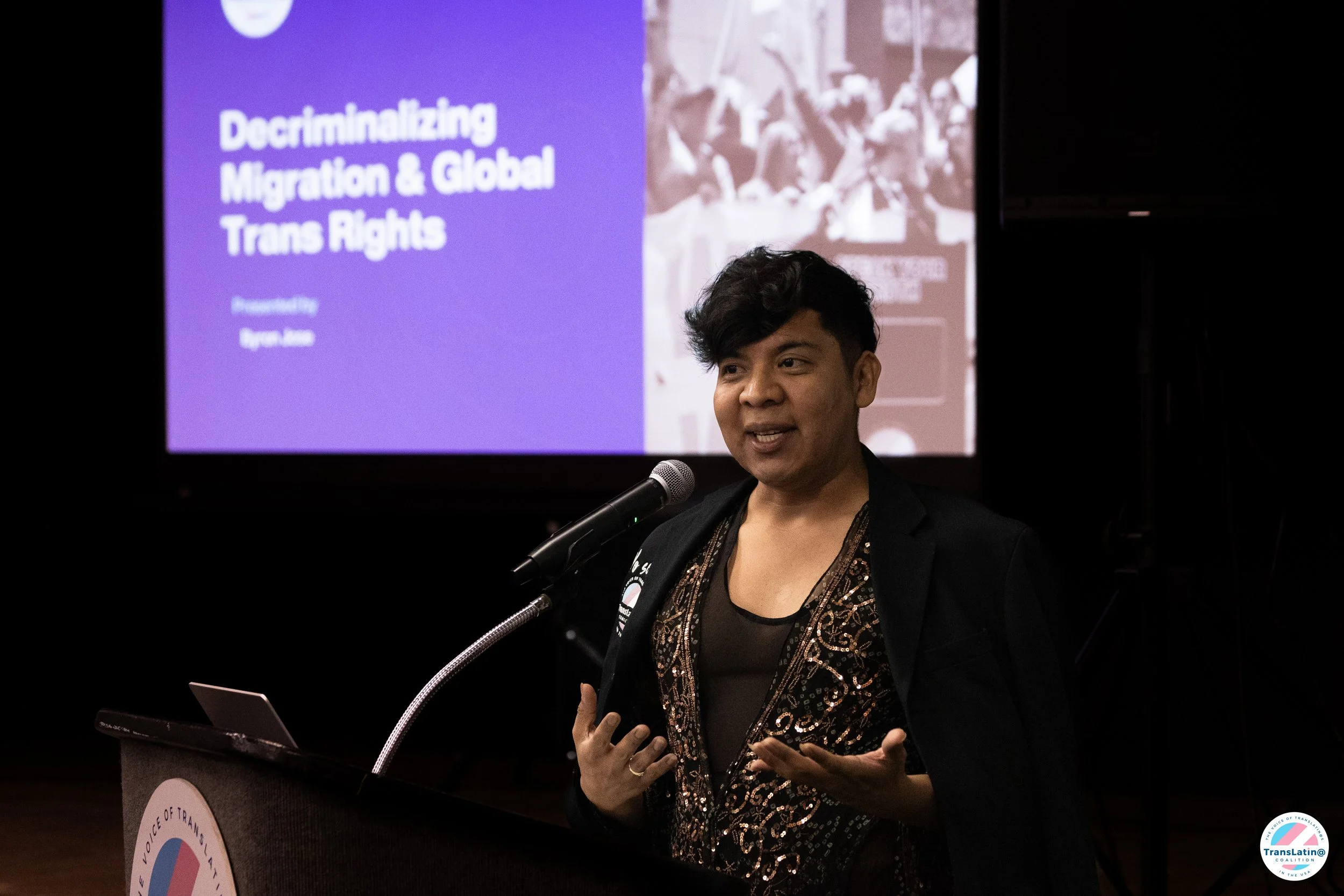
Byron Jose presents on the organization’s work advancing global trans rights.
These practices demonstrate why culturally competent, individualized approaches to housing and care are so important. Safety should not mean isolation, and protection should not come at the expense of a person's dignity, autonomy, or access to community.
Advocating for Access to the K6G Unit
One of the carceral diversion areas our organization has been advocating for is the K6G unit at Men's Central Jail. K6G was established to house LGBTQ+ incarcerated people and provide a space where individuals can live alongside members of their community.
We are continuing to advocate for access to the K6G unit so that our organization, along with other anti-carceral, LGBTQ+, and TGI-led organizations, can provide programs and services directly to people who are incarcerated there. Our goal is not simply to improve conditions inside the facility, but also to help create pathways for people to return to their communities through early release, reentry, diversion, and step-down programs.
After approximately two years of advocacy and navigating the clearance process, our President and CEO, Bamby Salcedo; our Policy Strategist, Byron Jose; and the Executive Director of La Defensa, Ivette Ale Ferlito, were able to enter the K6G unit and speak directly with incarcerated community members.
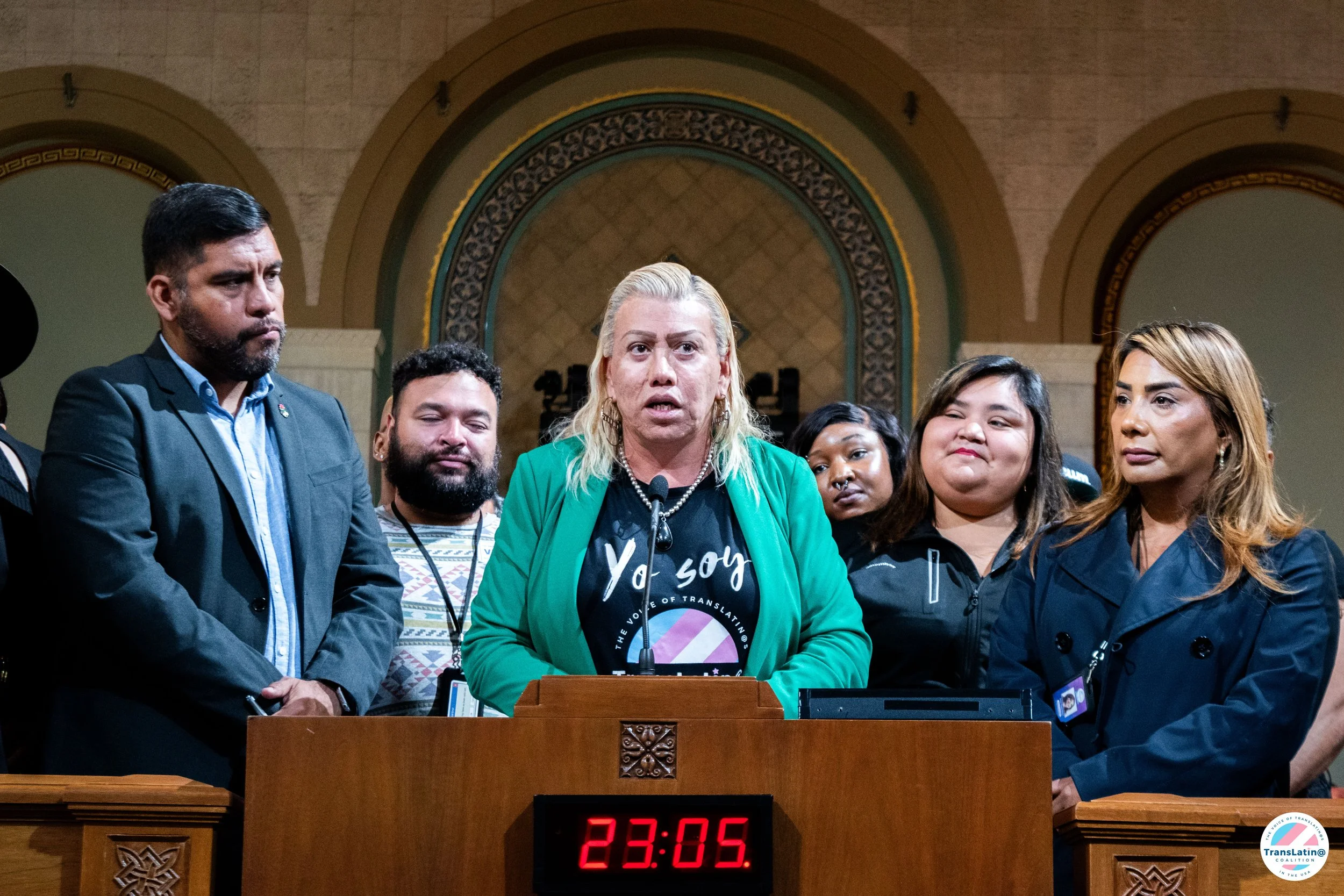
President and CEO Bamby Salcedo testifying before L.A. City Council.
I remember Byron and Ivette reporting their observations to Los Angeles County’s Gender Responsive Advisory Committee, which collects and reviews research on gender-responsive and trauma-informed care during incarceration. When speaking on their visit to the unit, they both described harsh lighting that remained on continuously and significant noise pollution, including the constant sound of what felt like a large air-conditioning system operating throughout the unit.
These environmental conditions may seem like small details, but when people are exposed to them continuously while incarcerated, they can contribute to an environment that is deeply harmful to a person's physical and mental well-being.
The people incarcerated within K6G also told our trusted messengers that they had access to only two programs, while individuals in other men's housing units had access to significantly more programs and services.
The issue was not necessarily that these programs did not exist. Rather, incarcerated people in K6G reported that there was often no staff available to escort them to programs that were otherwise available to the general population.
This creates another layer of inequity. A program cannot truly be considered accessible if the people who need it cannot physically reach it.
Our organization wants to gain access to bring culturally relevant programs and services directly into the K6G unit as trusted messengers. We also want other TGI-led and anti-carceral LGBTQ+ organizations to have the opportunity to enter these spaces and provide meaningful support.
Even as small as bringing in 2-3 iPads to work with those in the unit and connect them with step-down programs, food programs, transitional housing, and LGBTQIA+ organizations, ensures a warm handoff to the community that understands the needs they will have upon release from prison, which would improve their level of care immensely.
Investing in TGI-Led Community Organizations
This work extends beyond the jail system. In 2024, the Wellness and Equity Initiative received unanimous approval at the county level and allocated $7 million in Care First Community Investment (CFCI) funding to support nine TGI-led and TGI-serving community-based organizations throughout Los Angeles County.
A core component of the proposal was ensuring that participating organizations are at least 60% staffed by TGI community members. This reflects a principle that is central to our work: we are experts in our own experiences.
TGI communities deserve services delivered by people who understand our communities, our cultures, and the barriers we face. Cultural competency is not an optional addition to effective service delivery; it is essential.
The funding is now supporting thirteen often-underfunded community-based organizations providing life-saving programs and services to transgender, gender-expansive, and intersex people across Los Angeles County. It also includes the use of a third-party administrator to strengthen organizational infrastructure, expand training, and improve evaluation practices so that we can better measure whether these investments are reaching communities and addressing identified needs.
Capacity-building opportunities can include program evaluation and development, grant writing, board development, budgeting, fundraising, advocacy, billing through Medi-Cal managed care plans, and navigating opportunities to access direct county funding and become contractors for county services.
Building this infrastructure is critical. Community organizations cannot effectively advocate for their communities if they are constantly operating without the resources, staffing, and systems necessary to sustain their work.
We are also working closely with allied Councilmembers and advocating at the city level for an additional $4 million allocation to support TGI communities within the city of LA. The proposed funding has been included and embedded in the FY26/27 LA City budget at $500,000, and advocates are currently pursuing sole-source avenues for additional funding.
These investments are important because strengthening community-based organizations ultimately strengthens the infrastructure needed to serve people both inside and outside institutional settings.
Community Care and the Fight for Jail Closure
At its core, this work is connected to a larger vision of community care and an anti-carceral future. The TransLatin@ Coalition has worked with other coalitions, such as the Re-Imagine Los Angeles Coalition, because we understand the power of collective budget advocacy to ensure that underrepresented and underfunded communities receive tangible investments in their care.
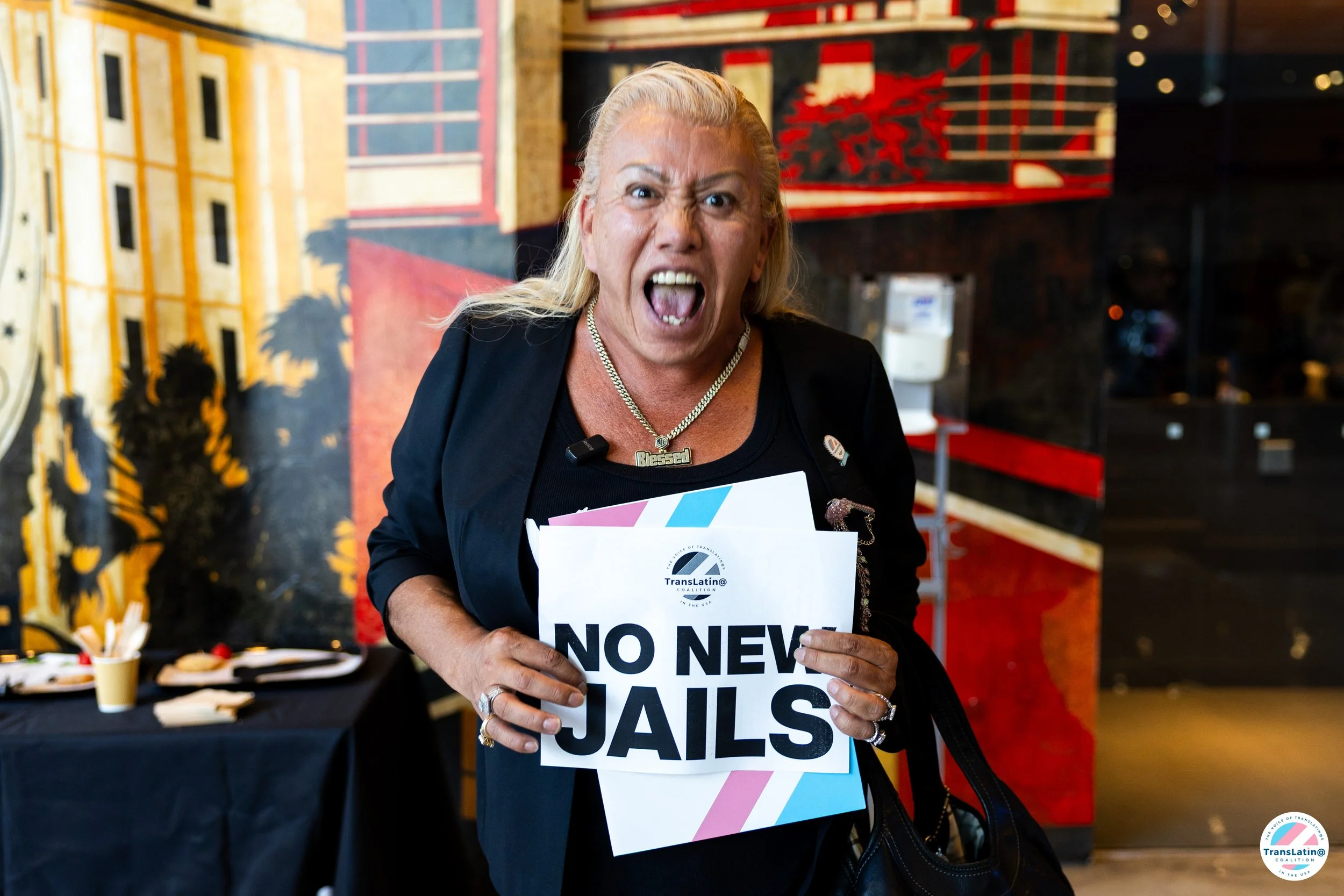
President and CEO advocates for no new jails in L.A. County.
The TransLatin@ Coalition is an anti-carceral organization that advocates for the rights and bodily autonomy of all people, regardless of gender identity, race, or class.
In 2020, our advocacy began with the county's requirement to conduct a research-based needs assessment as part of the Wellness and Equity Initiative, which was significant because it formally recognized that TGI communities have unmet needs and disparities in access to culturally competent services.
That recognition is an important step.
Getting the county to acknowledge disparities in access to culturally competent programs and services can help move us toward better treatment for TGI people across every institution they may encounter — whether they are employed, housed, or unhoused, incarcerated, receiving mental health services, participating in rehabilitation programs, or navigating any other institutional system.
We believe that jail closure is necessary for Los Angeles County to truly move toward a care-first, jails-last approach. But while we work toward that long-term goal, we also have an immediate responsibility to change the way every institution interacts with and treats Transgender, Gender-diverse, and Intersex people.
That means listening directly to the people most affected.
When we are granted access to our incarcerated community members, get to hear their stories, and document how facilities may be failing to meet their needs or obligations, we can begin to identify and track systemic injustices. That information can then strengthen advocacy efforts and help demonstrate why transformative change is necessary.
It gives organizations the capacity to advocate, provide services, build relationships, document community needs, and potentially bring programs directly into spaces such as K6G. More importantly, it strengthens our ability to advocate for people who are incarcerated and to create pathways for them to return to their communities.
Ultimately, our goal is not to make incarceration more comfortable or permanent. Our goal is to support our community, protect people's dignity and bodily autonomy, strengthen community-based alternatives, and build toward a future where people receive the care and support they need without being subjected to incarceration.
That is the long-term vision: care first, community-centered solutions, and a future where our communities have the resources to thrive outside of cages.
Maya Daniels (they/them), Local Policy Initiatives Organizer, The TransLatin@ Coalition
The TransLatin@ Coalition is a nationally recognized organization founded and led by transgender, gender expansive, and intersex people.
Since 2009, TLC has worked to improve the quality of life of TGI people through direct services, advocacy, community leadership, and research.
Learn more at www.translatinacoalition.org/